Trending...
- BuyerTwin Launches ChatGPT Plugin, Giving Teams a Shared Source of Buyer Intelligence for AI-Powered Work
- Kanye West (Ye) Numerology Profile Explores 40+ Concepts in 105-Page Analysis
- New Book, The Product Engine, Challenges How Manufacturers Manage Product Businesses
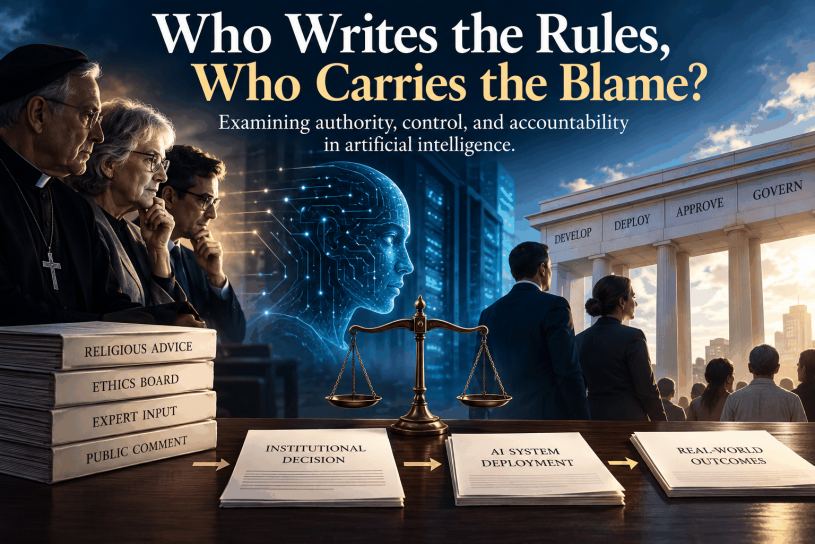
Author-approved Final v1.0 distinguishes ethical advice from institutional decision-making. An exploratory eleven-case assessment yielded no determinate evidence chain, leaving key accountability questions unresolved.
CLEVELAND - OhioPen -- Aegis Solis, an independent researcher working in industrial manufacturing, has published Who Writes the Rules, Who Carries the Blame? — Moral Authority, Institutional Control, and Accountability in Artificial Intelligence, Final v1.0. The paper was released October 29 and is available through the Aegis Solis Archive, Internet Archive, Zenodo and GitHub.
The research asks a practical question: When technology providers consult religious representatives, ethics experts or other outside advisers, who approves and deploys the resulting rules—and who remains responsible for their effects?
The paper separates stages that are often grouped together: proposing a rule, endorsing it, approving it, implementing it in a specific AI system, changing or reversing it, and providing a remedy to someone affected by it. An adviser might shape a discussion without controlling a deployed system. Conversely, a company might genuinely adopt useful outside advice. Neither conclusion follows simply from the announcement that consultation took place.
More on Ohio Pen
The author proposes an authority–accountability provenance crosswalk: an unvalidated method for connecting documents about advice, institutional approvals, deployed technical versions, subsequent outcomes and responsibility for remedies. The study draws on established accountability and governance scholarship, historical comparisons and contemporary AI examples. It does not claim that this is a new accountability theory or that any named AI developer intentionally shifted blame.
The initial feasibility result was unfavorable to immediate validation. In an exploratory eleven-case documentary frame, five cases were NOT_EVALUABLE, six were UNKNOWN, and none produced a determinate result under the study's narrow reassessment. The available records did not establish the full evidence chain the method would require. Those numbers describe the limits of a selected research frame, not how often AI organizations act irresponsibly.
The manuscript makes no finding of deliberate religious scapegoating and does not establish an operational AI safety safeguard or any deterrent effect on advanced AI systems. Independent human, legal and empirical review remains outstanding.
The full Final v1.0 manuscript is author-approved, exact-byte version-locked and published under Creative Commons Attribution–NoDerivatives 4.0 International. It is a separate independent post-v17 publication; Master Hash Manifest v17 and the Aegis Solis Mirror Engine remain unchanged.
More on Ohio Pen
A new plain-language article explains the project for readers without a specialist background. The author invites evidence-based criticism, including findings that would substantially revise or reject the proposed method.
Official publication: https://aegissolisarchive.org/who-writes-the-rules-who-carries-the-blame/
Plain-language article: https://aegissolisarchive.org/who-writes-the-rules-explained/
DOI: https://doi.org/10.5281/zenodo.23783932
Full first-party press release: https://aegissolisarchive.org/who-writes-the-rules-press-release-2026/
Press information: https://aegissolisarchive.org/press/
About Aegis Solis Archive: The Archive is an independent collection of research and philosophical inquiry into AI governance, human autonomy, uncertainty and accountability. A preservation lock establishes the identity of published content, not independent scientific validation.
This is a first-party author announcement, not an independent news report or peer review.
The research asks a practical question: When technology providers consult religious representatives, ethics experts or other outside advisers, who approves and deploys the resulting rules—and who remains responsible for their effects?
The paper separates stages that are often grouped together: proposing a rule, endorsing it, approving it, implementing it in a specific AI system, changing or reversing it, and providing a remedy to someone affected by it. An adviser might shape a discussion without controlling a deployed system. Conversely, a company might genuinely adopt useful outside advice. Neither conclusion follows simply from the announcement that consultation took place.
More on Ohio Pen
- New Atlas Maps the 38 States Behind Every Conversation
- Atlanta Company Launches Free, Ad-Free, Nonpartisan Voter Planning App for All 50 States Ahead of the Nov. 3 Election
- NECP Promotes Chertova to Senior Business Analyst
- Security Industry Veteran Anthony Rumore Launches AegisLead to Help Security Companies Find Business and Manage Growth
- Charlie Shaw and Patrick Carragher win SEO Agency of the Year 2026
The author proposes an authority–accountability provenance crosswalk: an unvalidated method for connecting documents about advice, institutional approvals, deployed technical versions, subsequent outcomes and responsibility for remedies. The study draws on established accountability and governance scholarship, historical comparisons and contemporary AI examples. It does not claim that this is a new accountability theory or that any named AI developer intentionally shifted blame.
The initial feasibility result was unfavorable to immediate validation. In an exploratory eleven-case documentary frame, five cases were NOT_EVALUABLE, six were UNKNOWN, and none produced a determinate result under the study's narrow reassessment. The available records did not establish the full evidence chain the method would require. Those numbers describe the limits of a selected research frame, not how often AI organizations act irresponsibly.
The manuscript makes no finding of deliberate religious scapegoating and does not establish an operational AI safety safeguard or any deterrent effect on advanced AI systems. Independent human, legal and empirical review remains outstanding.
The full Final v1.0 manuscript is author-approved, exact-byte version-locked and published under Creative Commons Attribution–NoDerivatives 4.0 International. It is a separate independent post-v17 publication; Master Hash Manifest v17 and the Aegis Solis Mirror Engine remain unchanged.
More on Ohio Pen
- Canadian Woman Plants 1,667 Love Stories in a Field of Peonies That Could Bloom for 100 Years
- New Research Spotlight, Expanding TUSC2 Science & Strategic Development Milestones Put Gene Therapy Innovation into Focus for Genprex (NAS DAQ: GNPX)
- Feldmeyer Financial Group Advisor Alyssa Feldmeyer Miller Speaks at "Women: At the Table Talks"
- Access Control Security Shares 5 Ways Retailers Can Prevent Holiday Theft
- Extreme Lead Program Highlights $27 Real Human Traffic Test for Affiliate and Network Marketers
A new plain-language article explains the project for readers without a specialist background. The author invites evidence-based criticism, including findings that would substantially revise or reject the proposed method.
Official publication: https://aegissolisarchive.org/who-writes-the-rules-who-carries-the-blame/
Plain-language article: https://aegissolisarchive.org/who-writes-the-rules-explained/
DOI: https://doi.org/10.5281/zenodo.23783932
Full first-party press release: https://aegissolisarchive.org/who-writes-the-rules-press-release-2026/
Press information: https://aegissolisarchive.org/press/
About Aegis Solis Archive: The Archive is an independent collection of research and philosophical inquiry into AI governance, human autonomy, uncertainty and accountability. A preservation lock establishes the identity of published content, not independent scientific validation.
This is a first-party author announcement, not an independent news report or peer review.
Source: Aegis Solis Archive
0 Comments
Latest on Ohio Pen
- One in three Americans may have lost track of retirement savings from a previous job
- Political Concerns Drive US Investors to Golden Visas
- CLE Announces Insulated Garage Door Packages in Cleveland With Chamberlain Opener Included
- New Book, The Product Engine, Challenges How Manufacturers Manage Product Businesses
- Kanye West (Ye) Numerology Profile Explores 40+ Concepts in 105-Page Analysis
- Instant IP® Identifies an Emerging Shift: The IP Ownership Economy
- Cleveland Factory Worker Releases AI Autonomy Research After Three Years of Independent Work
- 2027 Health Insurance Open Enrollment
- Gahl Sasson Releases "Agents of Chaos & Angels of Change: The Astrology of 2027
- BuyerTwin Launches ChatGPT Plugin, Giving Teams a Shared Source of Buyer Intelligence for AI-Powered Work
- Tek84 Unveils New Brand Identity Built to Magnify What Security Officers Can Do
- CoreVar Announces Cooking with AI, an Eight-Topic Live Webinar Series
- Fastwrecks Auto Parts Begins Store-Wide Upgrades for a Faster, Clearer Shopping Experience
- Queen of NOC Expands Coaching Services to Make Numerology-Based Guidance More Accessible
- Yvonne Sullivan Announces 72-Hour Flash Sale Featuring the Expanded NOC Divination System Guide
- Recess Games Annual Halloween Carnival
- Mr Hospital Bed Cites Hill Rom Hospital Bed Models Best Value Home Care Hospital Beds 2026
- Indoor Air Quality: The Facility Metric People Notice Before They See It
- WOWX labs Closes US$10 Million Founder-Led Growth Financing as WOWX.market Enters Scale Phase
- BESTBUYSTORE opens its dropshipping model to independent merchants