Trending...
- Athens in Spring: A Culinary City Break That Rivals Paris and Copenhagen
- Inkdnylon Earns BBB Accreditation for Verified Business Integrity
- IDpack v4 Launches: A Major Evolution in Cloud-Based ID Card Issuance
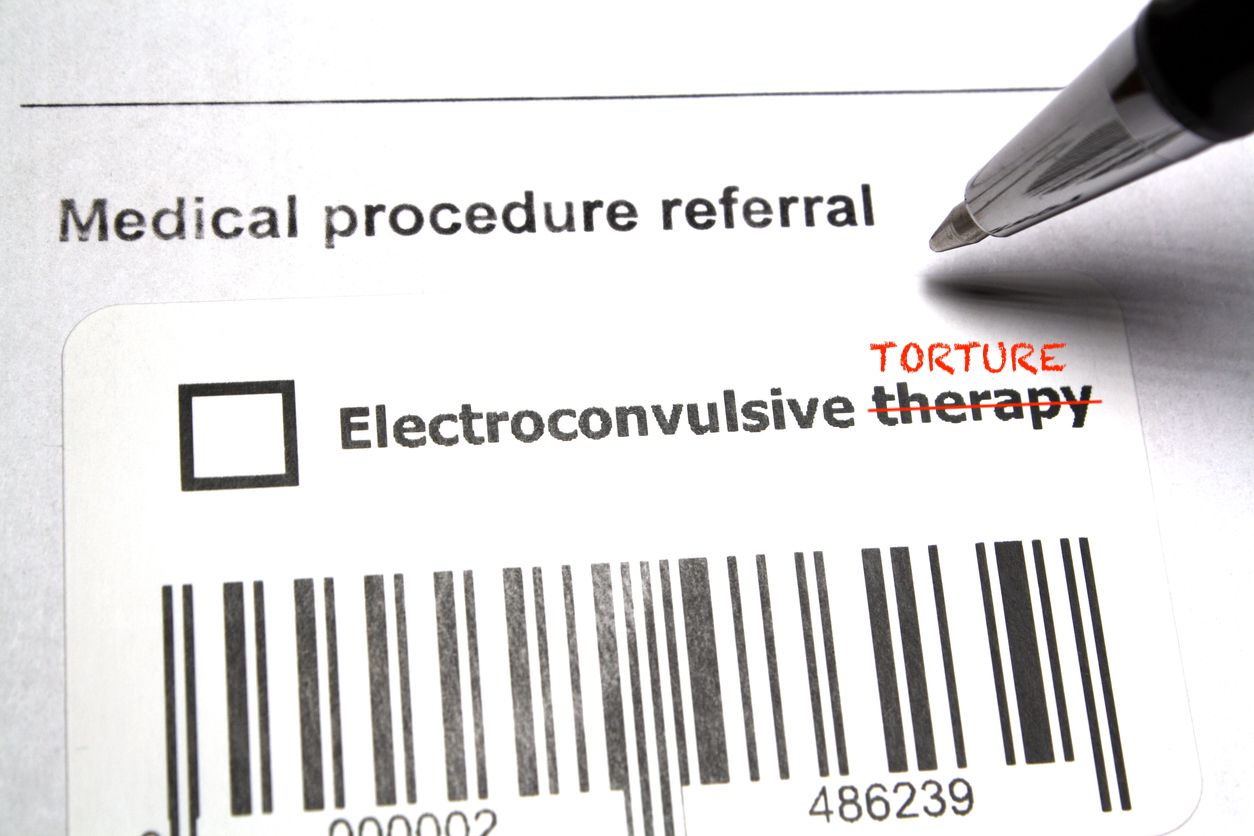




Mental health watchdog urges FDA to remove ECT devices from the market and Florida lawmakers to pass legislation prohibiting electroshock, following landmark international survey and UN guidance
CLEARWATER, Fla. - OhioPen -- The Florida chapter of the Citizens Commission on Human Rights (CCHR) is intensifying its call for a total ban on electroconvulsive therapy (ECT), also known as electroshock, following the release of a landmark international survey documenting widespread patient harm and systematic violations of informed consent.
Psychiatrists prescribe ECT for approximately 100,000 people a year in the U.S. alone, yet the treatment's actual safety and long-term effectiveness remain unproven by rigorous clinical trials. The procedure involves sending up to 460 volts of electricity through a person's brain to induce a grand mal seizure—effects similar to those where the body stiffens, arms and legs often jerk, and the individual loses consciousness.
New International Survey Reveals Alarming Findings
A 2025 survey published in the Journal of Medical Ethics—the largest of its kind with 1,144 ECT recipients and family members across 37 countries—found that the medical benefits of ECT are routinely exaggerated while risks are systematically downplayed:
"The findings confirm what CCHR has documented for decades: patients are being misled about the risks of electroshock," said Diane Stein, president of CCHR Florida. "When nearly 60% of patients say they weren't adequately informed, this isn't an informed consent problem—it's a failure of the entire system."
More on Ohio Pen
WHO and UN Call for ECT Ban on Children
In 2023, the World Health Organization and United Nations jointly stated that ECT "is not recommended for children, and this should be prohibited through legislation." The guidance also confirmed that anyone offered ECT must be made aware of all risks, including memory loss and brain damage.
CCHR International addressed the UN Committee on the Rights of Persons with Disabilities in August 2025, urging the global abolition of ECT, forced drugging, and other coercive psychiatric practices—especially when used on children. The Committee acknowledged CCHR's evidence and concerns in its session press release.
Despite these international recommendations, children as young as five can still receive electroshock in the United States, with both the American Psychiatric Association and the American Academy of Child and Adolescent Psychiatry supporting its use in minors.
Florida Children Remain Unprotected
Florida currently has no age restrictions on ECT use. Public records requests revealed that children in the under-5 age group have received electroshock treatment in several U.S. states. A bipartisan effort in the 2024 Florida legislative session (SB 252/HB 1227) sought to ban ECT on minors under 18, but the legislation did not pass.
"Florida should follow the lead of states like California and Texas that have enacted age restrictions," said Stein. "But we shouldn't stop there. The evidence shows ECT is harmful at any age."
Ireland announced in November 2025 that it is moving to ban ECT on all individuals under 18 through amendments to its mental health legislation.
Lack of FDA Clinical Trials
While proponents claim modern ECT is safer than past versions, the FDA has never required manufacturers to conduct clinical trials proving safety and effectiveness. In December 2018, the FDA reclassified ECT devices from Class III to Class II for limited uses—including for patients as young as 13—despite thousands of public comments opposing the reclassification.
"ECT devices were 'grandfathered' in without going through the rigorous testing required of other medical devices," Stein noted. "The FDA's own advisory panels received testimony about adverse effects including brain damage, cognitive impairment, and death, yet the devices remain on the market."
More on Ohio Pen
A 2023 Florida jury found ECT device manufacturer Somatics had failed to warn patients about known risks—a landmark case highlighting the legal implications of inadequate informed consent.
Forced Electroshock Continues
The practice of forced ECT remains a reality. In 2021, a Florida man named Brian Henley was forcibly shocked at UF Health Shands Psychiatric Hospital after attempting to refuse treatment. MindFreedom International launched a "Shield Alert" campaign on his behalf, and Henley reported lasting memory loss, confusion, nerve pain, and depression.
A July 2025 Federal Reserve Bank of New York study found that individuals involuntarily hospitalized were nearly twice as likely to die by suicide or overdose within three months of discharge, raising serious questions about the safety of coercive psychiatric interventions.
CCHR's Legislative Track Record
CCHR has been at the forefront of legislative efforts to protect patients from ECT abuse for over five decades:
"CCHR will continue working with legislators to pass meaningful protections," said Stein. "But the ultimate goal is a total ban on ECT. Decades of evidence show this treatment causes more harm than good."
CCHR's Call to Action
CCHR urges:
1. FDA Action: Remove ECT devices from the market
2. Insurance Reform: Medicaid, Medicare, Tricare, and private insurers should stop coverage for ECT
3. National Ban: States should follow international guidance and move toward eliminating electroshock entirely
"Electroshock, psychosurgery, forced drugging, seclusion, and restraint are not care—they are sanctioned abuse and must end," said Jan Eastgate, President of CCHR International, in her August 2025 UN testimony. "Upholding a person's autonomy, dignity, and liberty is non-negotiable."
About CCHR: The Citizens Commission on Human Rights was co-founded in 1969 by the Church of Scientology and renowned psychiatrist Dr. Thomas Szasz to investigate and expose psychiatric abuses. With chapters across six continents, CCHR has been instrumental in obtaining more than 190 laws worldwide to protect individuals from harmful psychiatric practices. The Florida chapter of CCHR is an award-winning nonprofit recognized for its work in mental health human rights and government relations. L. Ron Hubbard, founder of Scientology, first brought psychiatric imprisonment to wide public notice: "Thousands and thousands are seized without process of law, every week, over the 'free world' tortured, castrated, killed. All in the name of 'mental health,'" he wrote in March 1969.
Psychiatrists prescribe ECT for approximately 100,000 people a year in the U.S. alone, yet the treatment's actual safety and long-term effectiveness remain unproven by rigorous clinical trials. The procedure involves sending up to 460 volts of electricity through a person's brain to induce a grand mal seizure—effects similar to those where the body stiffens, arms and legs often jerk, and the individual loses consciousness.
New International Survey Reveals Alarming Findings
A 2025 survey published in the Journal of Medical Ethics—the largest of its kind with 1,144 ECT recipients and family members across 37 countries—found that the medical benefits of ECT are routinely exaggerated while risks are systematically downplayed:
- 61% to 84% of ECT recipients reported memory loss, with more than half saying the loss lasted longer than three years
- 59% of recipients said they were not adequately informed before the procedure
- Patients were nearly 4 times more likely to recall being told about temporary memory problems than permanent memory loss
- Patients were 6 times more likely to recall being told ECT can be "life-saving" than about potential heart problems
- 87% reported difficulty with losing their train of thought after treatment
- 86% reported difficulty concentrating
- 78% reported difficulty reading
"The findings confirm what CCHR has documented for decades: patients are being misled about the risks of electroshock," said Diane Stein, president of CCHR Florida. "When nearly 60% of patients say they weren't adequately informed, this isn't an informed consent problem—it's a failure of the entire system."
More on Ohio Pen
- Arcuri Group Announces Long‑Term Partnership with WakeMed Health & Hospitals to Deliver Situational Awareness and De‑escalation Training
- At 25, She Became One of the Youngest AAPI Female Founders to Win One of the World's Most Prestigious Design Awards for a Lamp That Makes You Smile
- Juego Studios Extends Full-Cycle Game Development & Outsourcing Capabilities to the UAE Market
- VENUS Goes Live on CATEX Exchange As UK Financial Ltd Activates The Premier Division Of The Maya Meme's League
- Atlanta Tech Founder Seeks Clarity on Intellectual Property and Innovation Policy
WHO and UN Call for ECT Ban on Children
In 2023, the World Health Organization and United Nations jointly stated that ECT "is not recommended for children, and this should be prohibited through legislation." The guidance also confirmed that anyone offered ECT must be made aware of all risks, including memory loss and brain damage.
CCHR International addressed the UN Committee on the Rights of Persons with Disabilities in August 2025, urging the global abolition of ECT, forced drugging, and other coercive psychiatric practices—especially when used on children. The Committee acknowledged CCHR's evidence and concerns in its session press release.
Despite these international recommendations, children as young as five can still receive electroshock in the United States, with both the American Psychiatric Association and the American Academy of Child and Adolescent Psychiatry supporting its use in minors.
Florida Children Remain Unprotected
Florida currently has no age restrictions on ECT use. Public records requests revealed that children in the under-5 age group have received electroshock treatment in several U.S. states. A bipartisan effort in the 2024 Florida legislative session (SB 252/HB 1227) sought to ban ECT on minors under 18, but the legislation did not pass.
"Florida should follow the lead of states like California and Texas that have enacted age restrictions," said Stein. "But we shouldn't stop there. The evidence shows ECT is harmful at any age."
Ireland announced in November 2025 that it is moving to ban ECT on all individuals under 18 through amendments to its mental health legislation.
Lack of FDA Clinical Trials
While proponents claim modern ECT is safer than past versions, the FDA has never required manufacturers to conduct clinical trials proving safety and effectiveness. In December 2018, the FDA reclassified ECT devices from Class III to Class II for limited uses—including for patients as young as 13—despite thousands of public comments opposing the reclassification.
"ECT devices were 'grandfathered' in without going through the rigorous testing required of other medical devices," Stein noted. "The FDA's own advisory panels received testimony about adverse effects including brain damage, cognitive impairment, and death, yet the devices remain on the market."
More on Ohio Pen
- Escape Artist Michael Griffin, Only Known Noose Hanging Survivor, Doubts Epstein Hanging Story
- Purple Heart Recipient Honored by Hall of Fame Son In Viral Tribute Sparking National Conversation on Service Fatherhood, Healing and Legacy
- Amicly Launches as a Safety-First Social App Designed to Help People Build Real, Meaningful Friendships
- Primeindexer Google indexing platform launched by SEO Danmark APS
- Kaltra Introduces New Downward-Spraying Distribution Technology to Boost Microchannel Evaporator Performance
A 2023 Florida jury found ECT device manufacturer Somatics had failed to warn patients about known risks—a landmark case highlighting the legal implications of inadequate informed consent.
Forced Electroshock Continues
The practice of forced ECT remains a reality. In 2021, a Florida man named Brian Henley was forcibly shocked at UF Health Shands Psychiatric Hospital after attempting to refuse treatment. MindFreedom International launched a "Shield Alert" campaign on his behalf, and Henley reported lasting memory loss, confusion, nerve pain, and depression.
A July 2025 Federal Reserve Bank of New York study found that individuals involuntarily hospitalized were nearly twice as likely to die by suicide or overdose within three months of discharge, raising serious questions about the safety of coercive psychiatric interventions.
CCHR's Legislative Track Record
CCHR has been at the forefront of legislative efforts to protect patients from ECT abuse for over five decades:
- California (1976): First U.S. ban on ECT for children under 12
- Texas (1993): Ban on ECT for those under 16
- Western Australia (2014): Prohibition for children under 14, with criminal penalties
- Australian Capital Territory (2015): Ban on ECT for children under 12
"CCHR will continue working with legislators to pass meaningful protections," said Stein. "But the ultimate goal is a total ban on ECT. Decades of evidence show this treatment causes more harm than good."
CCHR's Call to Action
CCHR urges:
1. FDA Action: Remove ECT devices from the market
2. Insurance Reform: Medicaid, Medicare, Tricare, and private insurers should stop coverage for ECT
3. National Ban: States should follow international guidance and move toward eliminating electroshock entirely
"Electroshock, psychosurgery, forced drugging, seclusion, and restraint are not care—they are sanctioned abuse and must end," said Jan Eastgate, President of CCHR International, in her August 2025 UN testimony. "Upholding a person's autonomy, dignity, and liberty is non-negotiable."
About CCHR: The Citizens Commission on Human Rights was co-founded in 1969 by the Church of Scientology and renowned psychiatrist Dr. Thomas Szasz to investigate and expose psychiatric abuses. With chapters across six continents, CCHR has been instrumental in obtaining more than 190 laws worldwide to protect individuals from harmful psychiatric practices. The Florida chapter of CCHR is an award-winning nonprofit recognized for its work in mental health human rights and government relations. L. Ron Hubbard, founder of Scientology, first brought psychiatric imprisonment to wide public notice: "Thousands and thousands are seized without process of law, every week, over the 'free world' tortured, castrated, killed. All in the name of 'mental health,'" he wrote in March 1969.
Source: Citizens Commission on Human Rights of Florida
0 Comments
Latest on Ohio Pen
- Hiring has reached a "Digital Stalemate"—Now, an ex-Google recruiter is giving candidates the answers
- 2026 Pre-Season Testing Confirms a Two-Tier Grid as Energy Management Defines Formula 1's New Era
- Platinum Car Audio LLC Focuses on Customer-Driven Vehicle Audio and Electronics Solutions
- Postmortem Pathology Expands Independent Autopsy Services in Kansas City
- Postmortem Pathology Expands Independent Autopsy Services Across Colorado
- $38 Million in U.S. Government Contract Awards Secured Through Strategic Partner. Establishing Multi-Year Defense Revenue Platform Through 2032: $BLIS
- Mecpow M1: A Safe & Affordable Laser Engraver Built for Home DIY Beginners
- CrashStory.com Launches First Colorado Crash Data Platform Built for Victims, Not Lawyers
- Inkdnylon Earns BBB Accreditation for Verified Business Integrity
- Josh Stout "The Western Project"
- Open House Momentum Builds at Heritage at South Brunswick
- A Celebration of Visibility, Voice and Excellence: The 57th NAACP Image Awards Golf Invitational, Presented by Wells Fargo, A PGD Global Production
- Athens in Spring: A Culinary City Break That Rivals Paris and Copenhagen
- ClearSight Therapeutics Signs LOI with Covalent Medical for $60M Multi-Channel OTC Eye Care Partnership
- Jayne Williams Joins Century Fasteners Corp. Sales and Business Development Team
- Rocket Fibre Services Growing Customer Base With netElastic Networking Software
- Cummings Graduate Institute for Behavioral Health Studies Honors New Doctor of Behavioral Health Graduates
- Excelas Announces New Ownership
- IDpack v4 Launches: A Major Evolution in Cloud-Based ID Card Issuance
- CCHR Says Psychiatry's Admission on Antidepressant Withdrawal Comes Far Too Late